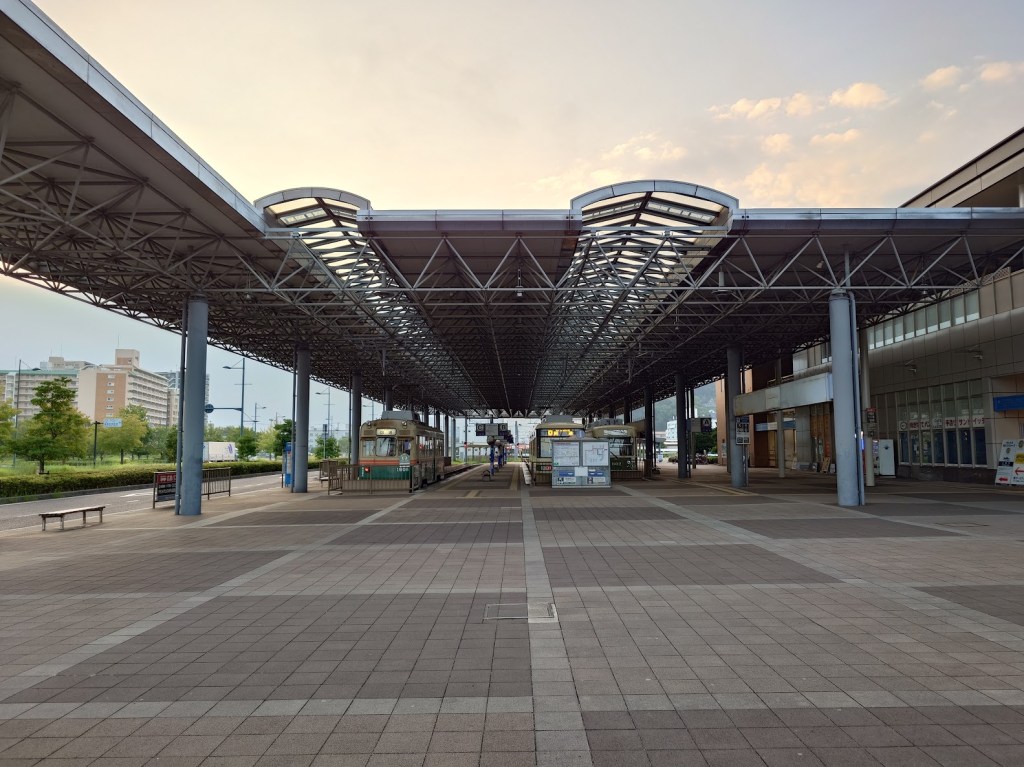
本日は高松から松山に移動します。早朝の高松駅。まだうどん屋がやってません。
Early morning at Takamatsu Station. Off to Imabari. The udon shops are still asleep.

予讃線沿線は造船所銀座ですね。坂出の川崎重工の造船所が見えてきました。
The Yosan Line is a paradise for shipbuilding enthusiasts. The massive Kawasaki Heavy Industries shipyard in Sakaide is now coming into view.

ほどなく丸亀の今治造船が見えてきます。立派なガントリークレーンですね。ロゴも一目で視認できます。
Before long, the Marugame Yard of Imabari Shipbuilding appears on the horizon. The towering gantry cranes are truly impressive, and the company’s logo is clearly visible even from the train.
この間、一つ造船所を撮り漏れています。あれは多度津造船所ですかね。今度撮る。
It looks like I missed one shipyard. I think it might have been Tadotsu Shipyard. I’ll be sure to capture it on my next trip.

西条の今治造船です。これもでかい。田んぼの中に忽然と出現します。
Here comes Imabari Shipbuilding’s Saijo Yard. It’s absolutely massive. Standing in the middle of the surrounding rice fields, it appears almost out of nowhere.

最後は今治造船の本社。電車からは見にくいです。
Our final stop is the headquarters of Imabari Shipbuilding. Unfortunately, it’s not easy to get a clear view from the train.

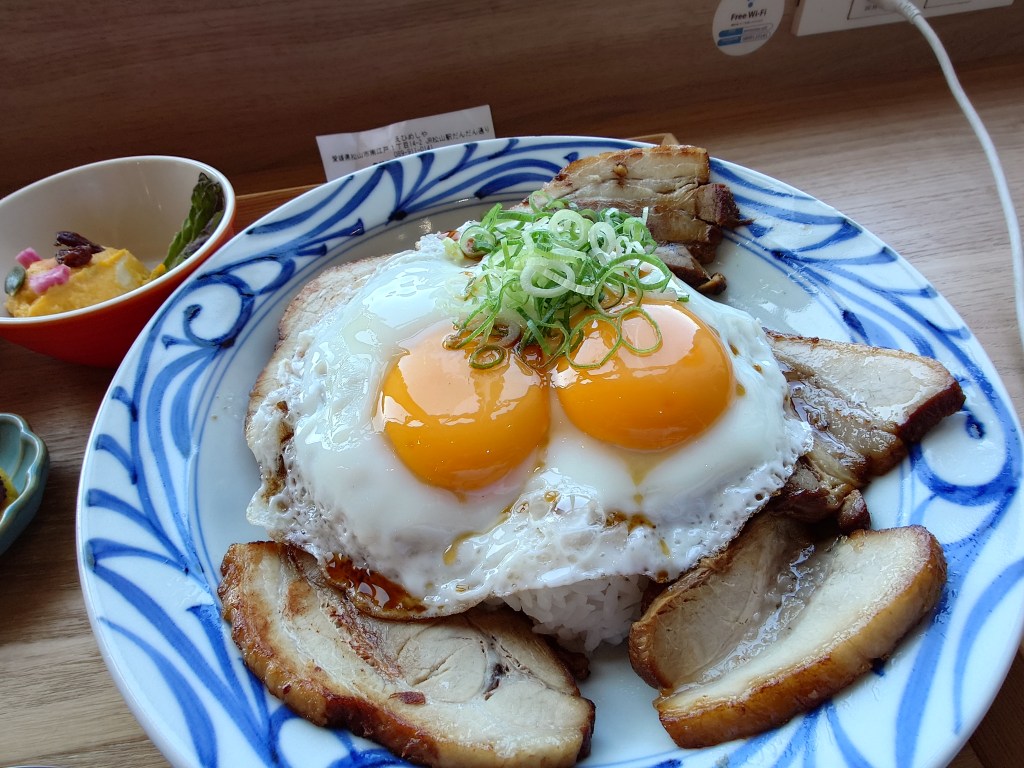
夜はスペイン料理屋さんで食事。愛媛の晴れの多い気候条件ではぐくまれた食材とスペイン料理には親和性があります。それは造船適地である証拠でもあります。ただ沿線通して見ると新規立地の余地があるのかどうか。政府の造船振興策は一筋縄ではいかないような気がします。
Dinner was at a Spanish restaurant. The fresh ingredients, nurtured by Ehime’s mild and sunny climate, seem perfectly suited to Spanish cuisine. Interestingly, these are also the very conditions that have made this region one of Japan’s premier shipbuilding centers. Yet, after traveling the length of the Yosan Line, I found myself wondering how much space remains for new shipyard development. Government initiatives to revitalize Japan’s shipbuilding industry may face greater challenges than they appear at first glance.